

Beyond the Brochure: Top 10 Natural Wonders of Indonesia You Must Visit
Indonesia, a sprawling archipelago nation, is a tapestry woven from over 17,000 islands, each shimmering with its own unique charm. It’s a land where ancient cultures thrive amidst breathtaking landscapes, where vibrant coral reefs meet fiery volcanoes, and dense jungles hide elusive wildlife. For the intrepid traveler, the natural wonders of Indonesia are an irresistible siren call, promising adventures that etch themselves into the very soul.
Forget the crowded tourist traps; this article delves into the truly spectacular, the awe-inspiring, and the utterly unique natural marvels that make Indonesia a top-tier destination for nature lovers. Prepare to be amazed as we unveil the Top 10 Natural Wonders of Indonesia you absolutely must visit.
1. Raja Ampat, West Papua: The Epicenter of Marine Biodiversity
Imagine diving into an underwater realm so vibrant, so teeming with life, it feels like stepping into a living kaleidoscope. Welcome to Raja Ampat, often hailed as the "Heart of the Coral Triangle" and the most biodiverse marine ecosystem on Earth. Located off the northwest tip of Bird’s Head Peninsula in West Papua, this archipelago of over 1,500 small islands, cays, and shoals is a diver’s paradise.
Why it’s a wonder: Raja Ampat boasts an unparalleled variety of coral species (over 75% of all known species), 1,427 types of reef fish, and a dizzying array of marine life, from manta rays and reef sharks to pygmy seahorses and wobbegong sharks. Above the surface, dramatic limestone karst islands covered in lush jungle rise majestically from turquoise waters, creating a landscape that is equally stunning.
Must-do: Diving or snorkeling is paramount. Explore iconic sites like Manta Point, Melissa’s Garden, and the passage between Gam and Waigeo. Kayaking through the hidden lagoons and climbing to viewpoints on Padar Island for panoramic vistas are also unforgettable experiences.
2. Komodo National Park, East Nusa Tenggara: Home of the Dragons
Step onto the shores of Komodo National Park, and you’ll feel like you’ve journeyed back to a prehistoric era. This UNESCO World Heritage site, comprising the islands of Komodo, Rinca, Padar, and numerous smaller islets, is the exclusive habitat of the legendary Komodo Dragon – the world’s largest living lizard.
Why it’s a wonder: Beyond the iconic dragons, the park offers a stunning diversity of landscapes. Think rugged hills, pristine white-sand beaches, vibrant coral reefs, and dramatic savannahs. The stark beauty of Padar Island, with its three crescent-shaped beaches (white, black, and pink) meeting at a central peak, is an iconic image of Indonesia.
Must-do: A guided trek on Komodo or Rinca Island to spot Komodo Dragons in their natural habitat is essential. Don’t miss the panoramic hike on Padar Island for breathtaking views, and snorkel or dive at Pink Beach, famous for its rose-tinted sand.
3. Mount Bromo, East Java: A Volcanic Masterpiece
In the heart of East Java lies Mount Bromo, an active volcano that forms part of the Tengger massif. Its otherworldly landscape, especially at sunrise, is one of Indonesia’s most iconic images. Rising from a vast "sea of sand" (a barren caldera), Bromo’s perpetually smoking crater against a backdrop of vibrant dawn colors is a sight that captivates every visitor.
Why it’s a wonder: The sheer drama of Bromo’s setting is unforgettable. The journey involves a pre-dawn jeep ride across the sandy caldera, followed by a short hike up to the crater rim, where you can peer into the smoking abyss. The surrounding landscape, including the dormant Mount Batok and the towering Mount Semeru in the distance, creates a truly surreal panorama.
Must-do: Embark on a sunrise tour to a viewpoint overlooking the caldera, then descend into the Sea of Sand to climb Mount Bromo itself. You can also explore the Hindu Tenggerese temple, Pura Luhur Poten, nestled at the base of Bromo.
4. Kawah Ijen, East Java: The Blue Fire Crater
Another volcanic marvel in East Java, Kawah Ijen offers a completely different, yet equally mesmerizing, spectacle. This active stratovolcano is famous for two unique features: its stunning turquoise acid crater lake and the ethereal "blue flames" that emerge from its sulfur vents at night.
Why it’s a wonder: The electric blue flames, caused by the combustion of sulfuric gases, are a rare natural phenomenon best observed in the dark hours before dawn. As the sun rises, the vast, intensely acidic turquoise lake, the largest in the world, comes into view, surrounded by sulfur deposits and the laborious work of traditional sulfur miners.
Must-do: Undertake a challenging pre-dawn hike to the crater rim to witness the blue fire, then stay to watch the sunrise illuminate the surreal landscape and the stunning lake. Be prepared for the strong sulfur smell and wear appropriate gear.
5. Lake Toba, North Sumatra: A Supervolcano’s Legacy
Nestled in the highlands of North Sumatra, Lake Toba isn’t just a lake; it’s the world’s largest volcanic lake and the site of a colossal supervolcanic eruption approximately 75,000 years ago. Today, it’s a serene, vast expanse of water with Samosir Island, almost the size of Singapore, rising majestically from its center.
Why it’s a wonder: The sheer scale of Lake Toba is breathtaking, stretching over 100 kilometers long and 30 kilometers wide. Its formation created a unique ecosystem and cultural landscape, home to the Batak people. The cool climate, stunning mountain vistas, and tranquil waters offer a refreshing escape.
Must-do: Rent a motorbike to explore Samosir Island, visit traditional Batak villages like Tomok and Ambarita, learn about their unique architecture and history, and enjoy swimming or kayaking in the lake’s calm waters.
6. Kelimutu Lakes, Flores: The Tri-Colored Mystical Craters
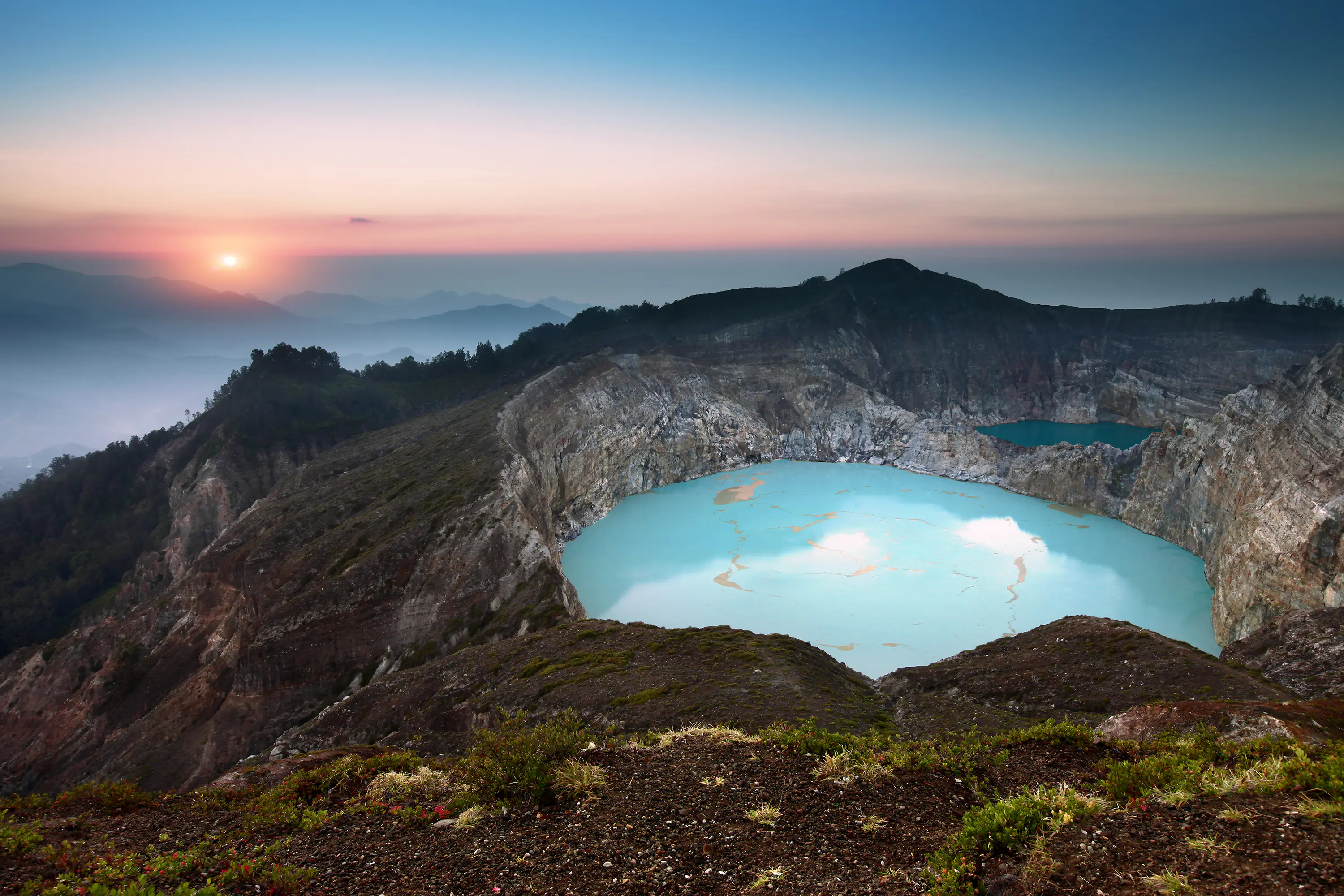
On the island of Flores, high in the mountains of Kelimutu National Park, lies one of Indonesia’s most enigmatic natural wonders: the three crater lakes of Kelimutu. What makes them so extraordinary is their ability to change color independently, often shifting from vibrant turquoise to deep red, murky green, or even black.
Why it’s a wonder: This unique phenomenon is attributed to varying mineral compositions and volcanic gas activity, making each lake a living, breathing geological marvel. Local legend holds that the lakes are the resting places of departed souls, their colors reflecting the moods of the spirits.
Must-do: Hike to the crater rim at sunrise to witness the magical transformation of the lakes as the light changes. Take time to absorb the mystical atmosphere and enjoy the panoramic views of the surrounding volcanic landscape.
7. Tanjung Puting National Park, Central Kalimantan: Orangutan Haven
Venture deep into the rainforests of Borneo, and you’ll discover Tanjung Puting National Park, a critical sanctuary for the endangered Bornean orangutan. This vast park, accessible via riverboat (klotok), offers an immersive wildlife experience unlike any other.
Why it’s a wonder: The chance to observe orangutans in their semi-wild habitat is truly profound. The park is a beacon of conservation, with rehabilitation centers like Camp Leakey providing a safe haven. Beyond orangutans, you might spot proboscis monkeys, macaques, clouded leopards, and a myriad of bird species amidst the lush jungle and mangrove forests.
Must-do: Take a multi-day klotok cruise up the Sekonyer River, sleeping on board under the stars. Visit the feeding stations at Camp Leakey, Pondok Tanggui, and Tanjung Harapan to see orangutans up close and learn about conservation efforts.
8. Bunaken Marine Park, North Sulawesi: Wall Diving Extravaganza
For those who love the underwater world but perhaps seek a slightly more accessible (though no less spectacular) experience than Raja Ampat, Bunaken Marine Park in North Sulawesi is a dream destination. This protected area is renowned for its incredible "wall diving" and phenomenal biodiversity.
Why it’s a wonder: Bunaken boasts some of the steepest coral walls in the world, plunging thousands of feet into the ocean depths. These walls are adorned with an astounding variety of hard and soft corals, sponges, and anemones, teeming with reef fish, turtles, reef sharks, barracudas, and occasional dugongs. The clear, warm waters offer excellent visibility year-round.
Must-do: Dive or snorkel along the famous drop-offs at sites like Lekuan I, II, and III, or Fukui Point. Explore the vibrant coral gardens and keep an eye out for green sea turtles gracefully gliding by.
9. Goa Jomblang Cave, Yogyakarta: The Light of Heaven
Hidden within the karst landscape near Yogyakarta, Goa Jomblang is a vertical cave that offers an adventure into a primeval forest and a truly ethereal sight. Descending 60 meters into the earth, visitors are met with an ancient jungle floor and, most famously, a breathtaking beam of light known as "The Light of Heaven."
Why it’s a wonder: The experience begins with a thrilling descent using a single rope technique, guided by professionals. Once inside, you walk through a muddy, ancient forest that has grown completely detached from the outside world. The highlight is when sunlight penetrates a sinkhole, creating a spectacular, almost spiritual, shaft of light illuminating the cave chamber.
Must-do: Join a guided caving tour. The descent and ascent are managed by a team, making it accessible even for beginners. Bring clothes you don’t mind getting muddy and waterproof shoes.
10. Ujung Kulon National Park, West Java: Last Refuge of the Javan Rhino
At the westernmost tip of Java lies Ujung Kulon National Park, Indonesia’s first national park and a UNESCO World Heritage site. This vast expanse of primary rainforest, volcanic islands (including the famous Anak Krakatau), and pristine beaches is a critical sanctuary for the critically endangered Javan rhinoceros, one of the rarest large mammals on Earth.
Why it’s a wonder: Ujung Kulon offers an untouched wilderness experience. While spotting a Javan rhino is incredibly rare, the park itself is a living testament to Java’s ancient ecosystem. It’s home to diverse wildlife like Javan gibbons, banteng (wild cattle), langurs, and a myriad of bird species. The pristine beaches and dense jungles offer a true escape into nature.
Must-do: Explore the park by boat and on foot. Hike through the dense rainforest, visit the beautiful beaches of Peucang Island, and perhaps kayak through the tranquil Cigenter River to spot wildlife, including crocodiles and pythons. A visit to Anak Krakatau, the child of the infamous Krakatoa, offers a dramatic geological perspective.
Your Indonesian Adventure Awaits
Indonesia is more than just a destination; it’s a journey into the heart of natural wonder. From the deepest oceans to the highest volcanic peaks, its landscapes tell tales of immense geological power, incredible biodiversity, and enduring natural beauty. Each of these ten wonders offers a unique, unforgettable experience that will deepen your appreciation for our planet’s marvels.
So, pack your bags, prepare your sense of adventure, and get ready to discover the unparalleled natural beauty that makes Indonesia a true jewel of Southeast Asia. Your extraordinary adventure begins now!