

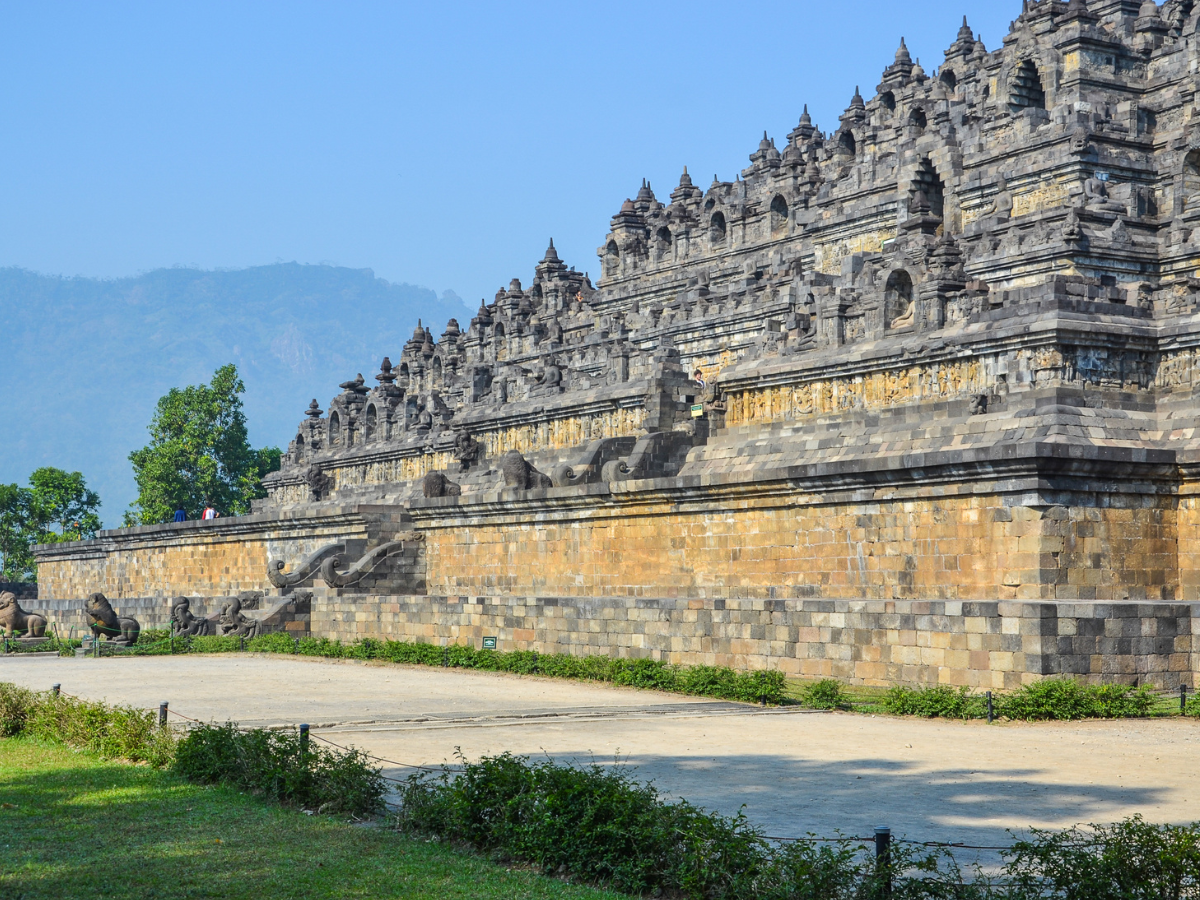
Exploring Borobudur: A Deep Dive into the World’s Largest Buddhist Monument
Nestled amidst the lush volcanic landscapes of Central Java, Indonesia, rises a monument of unparalleled grandeur and spiritual depth: Borobudur Temple. More than just an ancient ruin, Borobudur is a colossal three-dimensional mandala, a stone canvas depicting the path to enlightenment, and an enduring testament to human ingenuity and devotion. As the world’s largest Buddhist monument, it beckons millions each year to embark on a journey through its intricate carvings and ascending terraces, promising not just a visual spectacle but a profound spiritual experience.
A Monument Shrouded in Time
The story of Borobudur is as captivating as its architecture. Believed to have been constructed in the 8th and 9th centuries by the Sailendra Dynasty, this magnificent structure was built without mortar, relying solely on an interlocking system of nearly two million volcanic stone blocks. For centuries, it served as a vibrant center of Buddhist pilgrimage and learning, a beacon of faith in ancient Java.
However, around the 14th century, with the decline of Buddhist kingdoms and the rise of Islam in Java, Borobudur was mysteriously abandoned. It lay hidden and forgotten for hundreds of years, gradually consumed by volcanic ash and the dense jungle, transforming into a silent, earth-shrouded hill. It wasn’t until 1814 that Sir Thomas Stamford Raffles, the then-British ruler of Java, commissioned its rediscovery and initial clearing, bringing this colossal wonder back into the light of human consciousness. The subsequent restoration efforts, notably the massive UNESCO-backed project from 1973 to 1983, painstakingly brought Borobudur back to its former glory, solidifying its place as a UNESCO World Heritage site and a global treasure.
Architectural Grandeur: A Cosmic Mountain
Borobudur’s design is not merely impressive in scale; it is a profound cosmological diagram. From an aerial view, it resembles a gigantic stupa, but its true genius lies in its multi-layered structure, symbolizing the Buddhist concept of the universe and the spiritual journey towards nirvana.
The temple is built on a natural hill, meticulously shaped into a series of nine stacked platforms: six square terraces at the bottom and three circular platforms on top, culminating in a central, monumental stupa. This layout represents the three realms of Buddhist cosmology:
- Kāmadhātu (The World of Desire): The base level, mostly hidden from view, symbolizes the mundane world governed by desires and attachments.
- Rupadhātu (The World of Forms): The five square terraces represent the realm where individuals have transcended desires but are still bound by form and individuality. This is where the majority of the intricate relief panels are found.
- Arupādhātu (The World of Formlessness): The three circular platforms at the top symbolize the highest spiritual realm, where all forms and names have been shed, leading to pure enlightenment. This level is characterized by open-lattice stupas and a sense of serene emptiness.
As you ascend Borobudur, you are not just climbing stairs; you are undertaking a symbolic pilgrimage, shedding earthly concerns with each step, moving closer to ultimate understanding.
The Narrative in Stone: Relief Panels
Perhaps the most astonishing feature of Borobudur is its astounding collection of 2,672 individual relief panels, stretching over a combined length of 2.5 kilometers. These exquisitely carved volcanic stone panels are not mere decorations; they form the largest and most comprehensive ensemble of Buddhist reliefs in the world, serving as a visual scripture for pilgrims.
Beginning at the lowest square terraces, the narratives unfold in a clockwise circumambulation, guiding the pilgrim through various Buddhist teachings and stories:
- Kāmadhātu: Although largely hidden by an encasement built for structural stability, a section of the base reveals reliefs depicting scenes of karma, illustrating the consequences of good and bad deeds.
- Rupadhātu: Here, the stories become more profound. The first gallery depicts the Lalitavistara, the life story of Siddhartha Gautama from his birth to his first sermon. Subsequent galleries illustrate the Jataka tales (stories of Buddha’s previous lives as a Bodhisattva) and Avadana tales (stories of noble deeds). The final and highest square terraces delve into the Gandavyuha saga, chronicling the spiritual quest of Sudhana, a young seeker, as he journeys to various teachers in search of ultimate truth.
Each panel is a masterpiece of ancient Javanese artistry, rich in detail, emotion, and symbolic meaning. To walk these galleries is to read a sacred book carved in stone, a silent sermon that has resonated through centuries.
Silent Guardians: The Stupas and Buddha Statues
As you reach the upper circular terraces, the landscape of stone shifts from narrative reliefs to serene, geometric forms. Here, 72 small, bell-shaped stupas, each with a distinctive perforated or ‘lattice’ design, encircle the main central stupa. Within the delicate lattice of each small stupa sits a life-sized Buddha statue, almost hidden from view, yet subtly revealed.
These 504 Buddha statues, positioned throughout the monument, exhibit different hand gestures (mudras), each signifying a particular teaching or moment in Buddha’s life. As you ascend, the mudras subtly change, symbolizing the progression towards enlightenment. The climax of the temple’s design is the massive, enclosed central stupa, which traditionally is believed to contain a relic or a statue, though it was found empty upon excavation. Its smooth, unadorned surface represents the ultimate void, the state of nirvana – boundless and formless.
The Spiritual Ascent: A Journey to Enlightenment
Exploring Borobudur is more than just sightseeing; it’s an immersive, multi-sensory journey. The physical act of ascending the nine levels, circumambulating each terrace, and deciphering the stories in stone, mirrors the spiritual path to enlightenment. It’s a deliberate progression from the realm of earthly desires and material forms to the sublime serenity of formlessness and ultimate wisdom.
The careful arrangement of reliefs, statues, and architectural elements creates an atmosphere conducive to contemplation and introspection. At dawn, as the sun bathes the ancient stones in golden light and mist still clings to the surrounding volcanoes, the experience is particularly ethereal, offering a glimpse into the sacred purpose for which this monumental temple was built.
Experiencing Borobudur: Tips for Your Visit
To truly appreciate Borobudur, consider these tips:
- Sunrise Visit: While it requires an early start, witnessing the sunrise over Borobudur, with the surrounding volcanoes emerging from the morning mist, is an unforgettable experience. Special sunrise tickets are available.
- Dress Respectfully: As a sacred site, modest attire is recommended. Shoulders and knees should be covered. Sarongs are often provided or can be rented.
- Wear Comfortable Shoes: You’ll be doing a lot of walking and climbing stairs.
- Go Clockwise: Follow the traditional circumambulation path by walking clockwise around each terrace to fully appreciate the narrative flow of the reliefs.
- Hire a Guide: A local guide can unlock deeper meanings behind the reliefs and architecture, enriching your understanding of this complex monument.
- Stay Hydrated: Java’s tropical climate can be hot and humid.
Preservation for Posterity: UNESCO and Beyond
The monumental task of preserving Borobudur against the ravages of time, weather, and seismic activity is ongoing. Its UNESCO World Heritage status underscores its "outstanding universal value" and the global commitment to its protection. Continuous monitoring, conservation efforts, and careful management of visitor numbers are crucial to ensure that this magnificent legacy continues to inspire future generations.
Conclusion: An Enduring Legacy
Borobudur Temple is not merely a collection of stones; it is a living testament to faith, art, and philosophical depth. It stands as a powerful reminder of a sophisticated civilization and a profound spiritual quest. As you descend its terraces, having traversed the journey from earthly desires to the silent wisdom of the circular platforms, you carry with you not just memories of a breathtaking sight, but perhaps a deeper understanding of humanity’s enduring search for meaning. Exploring Borobudur is an invitation to connect with history, art, and the universal aspiration for enlightenment – a truly unforgettable deep dive into a world wonder.