

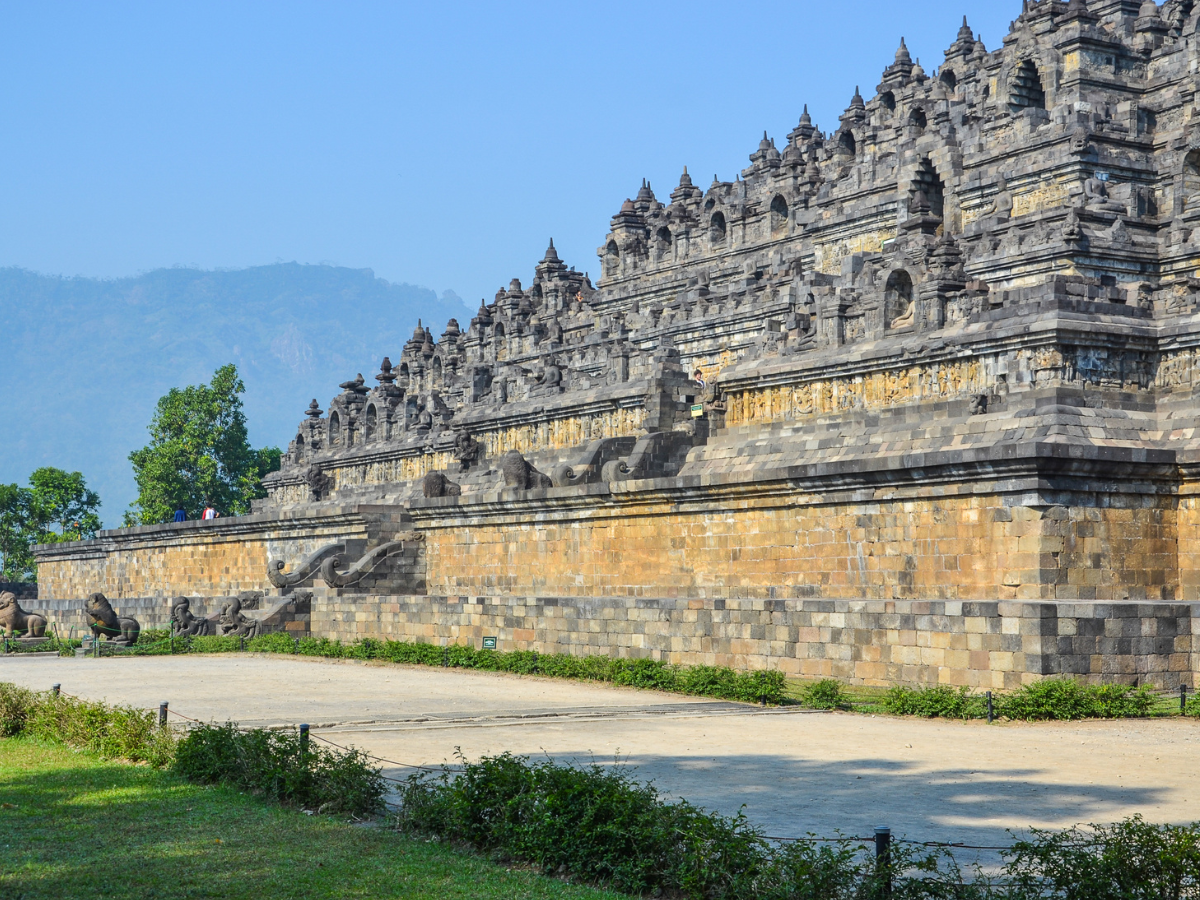
Exploring Borobudur Temple: A Journey to the World’s Largest Buddhist Monument
Imagine a place where history whispers through ancient stones, where spirituality permeates the very air, and where architectural genius reaches for the heavens. Nestled amidst the lush volcanic landscapes of Central Java, Indonesia, stands Borobudur Temple – a colossal testament to human ingenuity and devotion. As the world’s largest Buddhist monument, this majestic structure is not merely a collection of stones; it is a profound journey, a cosmic mountain carved from volcanic rock, inviting pilgrims and travelers alike to embark on an unparalleled exploration of faith, art, and history.
For those seeking an experience that transcends the ordinary, Borobudur offers an encounter with the sublime. This article will guide you through its captivating history, unravel its architectural mysteries, illuminate the stories etched in its stone, and provide practical tips for planning your own unforgettable pilgrimage.
A Glimpse into History: Unearthing a Lost Wonder
The story of Borobudur is as enthralling as its appearance. Constructed between the 8th and 9th centuries by the Sailendra Dynasty, a powerful seafaring kingdom that embraced Mahayana Buddhism, Borobudur predates Cambodia’s Angkor Wat by three centuries. Its construction was an monumental undertaking, involving an estimated two million blocks of volcanic and river stone, meticulously carved and assembled without the use of mortar. The temple was built as a giant stupa, a shrine to the Buddha, and a place of pilgrimage designed to guide adherents towards enlightenment.
For reasons still debated by historians – possibly due to volcanic eruptions, the decline of Buddhist kingdoms in Java, or the rise of Islam in the region – Borobudur was mysteriously abandoned sometime in the 10th or 11th century. Over the centuries, it lay hidden beneath layers of volcanic ash and dense jungle, swallowed by the earth and largely forgotten, save for local legends of a colossal, cursed monument.
It wasn’t until 1814, during the brief British rule of Java, that the then-Lieutenant Governor, Sir Stamford Raffles, heard tales of a great monument deep in the jungle. He dispatched a Dutch engineer, H.C. Cornelius, and a team of 200 men to clear the site. What they uncovered was astonishing: a massive, intricately decorated temple complex, remarkably preserved despite centuries of neglect. The subsequent decades saw various attempts at restoration, but it was the monumental UNESCO-led project between 1973 and 1983 that truly brought Borobudur back to its former glory, solidifying its place as a UNESCO World Heritage Site in 1991.
Architectural Marvel: A Cosmic Mountain of Stone
Borobudur’s architecture is a masterpiece of symbolic design, representing the Buddhist cosmos in stone. From an aerial view, it resembles a giant mandala, a diagram used in sacred rituals. The temple is built on a natural hill, transformed into a multi-tiered pyramid with nine stacked platforms: six square terraces at the bottom and three circular ones above, culminating in a magnificent central stupa.
The structure is divided into three distinct zones, each symbolizing a stage in the Buddhist path to enlightenment:
- Kamadhatu (The World of Desire): The lowest level, mostly hidden by a retaining wall, represents the mundane world of desires and human passions. While largely obscured, a portion of its original base is visible, revealing exquisite reliefs depicting karmic law and human suffering.
- Rupadhatu (The World of Forms): Comprising the five square terraces, this section represents the world where individuals have abandoned desires but are still bound by name and form. These terraces are a labyrinth of corridors adorned with an astounding 2,672 individual relief panels – the largest and most complete ensemble of Buddhist reliefs in the world. These panels narrate the life of Buddha (Lalitavistara), his previous incarnations (Jataka tales), and the quest for ultimate wisdom (Gandavyuha). Walking these galleries clockwise is a spiritual pilgrimage, a visual sermon guiding the devotee through the stages of enlightenment.
- Arupadhatu (The World of Formlessness): The three uppermost circular platforms represent the realm of pure spirit, where one is free from earthly forms and desires. Here, the open terraces are dotted with 72 smaller stupas, each latticed and housing a serene Buddha statue, mostly in the vitarka mudra (gesture of teaching). These Buddhas are often depicted in various meditative poses, symbolizing different aspects of the Buddha’s teachings.
The pinnacle of Borobudur is the massive central stupa, which stands 42 meters above the ground, empty and symbolic of nirvana, the ultimate emptiness or release from suffering. In total, the temple complex houses 504 Buddha statues, each contributing to the monument’s profound sense of peace and contemplation.
The Story in Stone: A Journey of Enlightenment
To truly appreciate Borobudur, one must understand that it was designed as a sacred text in stone. A pilgrim traditionally begins at the base, circumambulating each level clockwise, absorbing the narratives carved into the walls. This physical ascent mirrors a spiritual journey, guiding the mind from the realm of earthly desires towards ultimate wisdom.
The reliefs are a visual encyclopedia of Buddhist philosophy and Javanese life in the 9th century. They depict not only mythical beings and celestial realms but also everyday scenes: farmers tilling fields, merchants trading goods, and musicians playing instruments. This intricate blend of the sacred and the mundane makes the temple a vibrant window into ancient culture and spirituality. The sheer scale and detail of these carvings are breathtaking, telling stories that resonate with universal themes of compassion, wisdom, and the pursuit of truth.
Borobudur Today: A Beacon of Spirituality and Culture
Today, Borobudur stands as Indonesia’s most visited tourist attraction and a potent symbol of the nation’s rich cultural and religious diversity. It continues to be a significant pilgrimage site for Buddhists worldwide, especially during Vesak (Buddha’s birthday), when thousands gather for a solemn and beautiful procession, culminating at the temple.
Beyond its spiritual significance, Borobudur is a marvel of engineering and artistic expression, a testament to the advanced civilization that flourished in ancient Java. Its restoration by UNESCO set new standards for heritage preservation globally, ensuring that this irreplaceable monument continues to inspire awe for generations to come.
Planning Your Pilgrimage: Tips for Visiting Borobudur
To make your exploration of Borobudur as rewarding as possible, consider these practical tips:
- Best Time to Visit: Arrive early! Catching the sunrise over Borobudur is an iconic experience, offering breathtaking views as the first rays of light illuminate the ancient stones and the surrounding misty volcanoes. Gates typically open around 6:00 AM (or earlier for sunrise packages). Visiting during the early morning also allows you to beat the intense midday heat and larger crowds.
- Getting There: Borobudur is located approximately 40 kilometers northwest of Yogyakarta, a major cultural hub in Java. You can hire a private car with a driver, take a taxi, or join a tour group from Yogyakarta.
- Dress Code: While there isn’t a strict dress code like in some other religious sites, it’s respectful to dress modestly. Shoulders and knees should be covered. Sarongs are often provided at the entrance if your attire is deemed inappropriate.
- Guides: Hiring a local guide is highly recommended. Their insights into the temple’s history, symbolism, and the stories depicted in the reliefs will immeasurably enrich your experience.
- Respectful Conduct: Remember that Borobudur is a sacred site. Be mindful of your noise level, do not climb on the stupas or statues, and always treat the monument with reverence.
- Beyond the Temple: Don’t miss the smaller, equally ancient Buddhist temples of Pawon and Mendut, located a few kilometers from Borobudur. They form a spiritual complex with Borobudur, and their intricate statues and serene atmosphere offer a beautiful complement to the grand scale of the main monument.
The Enduring Legacy: More Than Just Stones
Borobudur is more than just the world’s largest Buddhist monument; it is a profound journey into the heart of human aspiration and artistic achievement. It stands as a silent sentinel, bearing witness to centuries of history, faith, and the enduring quest for meaning. From its mysterious abandonment to its triumphant rediscovery and meticulous restoration, Borobudur’s story is one of resilience and timeless beauty.
To walk its hallowed corridors, to trace the stories in its stone, and to gaze upon the serene faces of its Buddhas is to connect with a legacy that transcends time and culture. It is an experience that will leave you with a deep sense of awe, inspiring reflection on the power of faith, the grandeur of human endeavor, and the universal journey towards enlightenment. Borobudur is not just a place to visit; it is a world to explore, a story to uncover, and a spiritual awakening waiting to happen.