

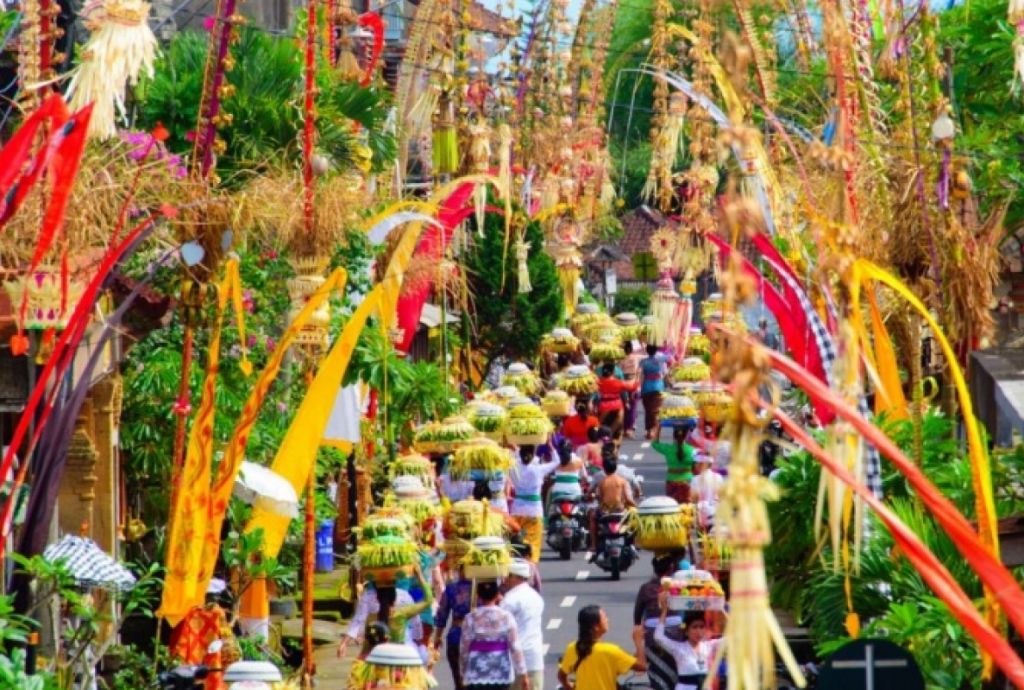
Galungan: Bali’s Sacred Symphony of Harmony Between Gods and Humans
Bali, the "Island of the Gods," is a place where spirituality is not merely a practice but the very rhythm of life. Temples dot every landscape, offerings perfume the air, and ceremonies are woven into the daily fabric of existence. Among these myriad traditions, one festival shines with particular brilliance and significance: Galungan. More than just a celebration, Galungan is a profound declaration of faith, a vibrant reaffirmation of balance, and a sacred symphony orchestrating harmony between the divine and the mortal.
Celebrated every 210 days according to the Balinese Pawukon calendar, Galungan marks the victory of Dharma (good) over Adharma (evil). It is a time when the ancestral spirits, along with the deities, descend to Earth to visit their former homes and bless their descendants. This sacred visitation transforms the entire island into a breathtaking canvas of spiritual devotion, communal festivity, and artistic expression.
The Philosophy: A Balance Restored
At its heart, Galungan embodies the fundamental Balinese Hindu philosophy of Rwa Bhineda – the balance between opposing forces. It’s not about eradicating evil entirely, but rather about acknowledging its existence and ensuring the triumph of good, light over darkness, and spiritual wisdom over ignorance. The festival serves as a powerful reminder for individuals to cleanse their inner selves, uphold virtuous conduct, and express gratitude for the blessings bestowed upon them.
The return of ancestral spirits is a cornerstone of the Galungan belief. For the Balinese, ancestors are not gone but merely in another realm, and their connection to the living remains strong. During Galungan, families meticulously prepare to welcome these revered spirits, believing their presence brings blessings, guidance, and protection. This deep reverence for those who came before highlights the continuous thread of spiritual heritage that defines Balinese culture.
The Visual Splendor: Penjor, The Symbol of Prosperity
Perhaps the most iconic visual of Galungan is the penjor. These magnificent, towering bamboo poles, elegantly arching over the streets, transform every village and town into an open-air art gallery. Each penjor, meticulously decorated with intricate young coconut leaves, colorful flowers, rice stalks, fruit, and offerings, is a work of art and devotion.
More than just decoration, the penjor is rich in symbolism. The tall bamboo represents Mount Agung, Bali’s sacred volcano, believed to be the dwelling place of the gods. Its graceful curve symbolizes the tail of Naga Basuki, a mythical dragon of fertility and prosperity. The offerings hung at its base are tributes to the earth and the heavens, seeking blessings for a bountiful harvest and overall well-being. Erecting a penjor in front of every home is a personal declaration of faith, a welcome sign for the returning deities and ancestors, and a visible manifestation of gratitude.
The Preparations: A Rhythmic Buildup to Sacredness
The spirit of Galungan doesn’t merely erupt on the main day; it builds over several days, each with its own specific rituals and significance. This meticulous preparation underscores the importance of the festival and allows families to fully immerse themselves in its spiritual journey.
- Penyekeban: Three days before Galungan, this day is dedicated to ripening bananas in earthenware pots, a symbolic act of preparing for the feast.
- Penyajaan: Two days before, the focus shifts to making jajan, traditional Balinese cakes and sweets. These colorful, often intricate treats are essential for offerings and sharing among family and friends. This day also involves deep spiritual cleansing and self-reflection.
- Penampahan Galungan: The day before Galungan is a flurry of activity. Animals, typically pigs or chickens, are ritually slaughtered to be used in preparing lawar (a traditional Balinese dish) and other festive meals. This act symbolizes the slaying of negative forces and the purification of the self, ensuring a clean slate for the main festival day. Villages come alive with the sounds of communal cooking and the bustling energy of preparation.
Galungan Day: A Celebration of Light
Finally, the main day of Galungan dawns, filled with an ethereal glow. Balinese families, adorned in their finest traditional attire (kebaya for women, udeng and sarong for men), gather at their family temples and public temples for prayers and offerings. The air is thick with the fragrant smoke of incense, the melodic chants of priests, and the gentle chime of bells.
Offerings, known as banten, are meticulously prepared and presented. These elaborate arrangements of food, flowers, and symbolic items are not merely gifts but expressions of devotion, gratitude, and a plea for blessings. The focus is on purification, spiritual communion, and the strengthening of familial bonds. After the temple ceremonies, families return home to share festive meals, exchange greetings, and revel in the joy of togetherness. The Ngelawang ritual, where Barong figures (mythical lion-like creatures) parade through villages, blessing homes and driving away evil spirits, adds another layer of cultural richness and protective energy to the day.
Beyond Galungan: The Path to Kuningan
The celebration doesn’t end on Galungan day. The following day is Manis Galungan, a time for family visits, leisure, and enjoying the fruits of their spiritual labor. It’s a day of relaxed joy, continuing the festive atmosphere.
The Galungan cycle culminates ten days later with Kuningan. This festival marks the departure of the ancestral spirits back to their heavenly abodes. Special offerings are made, often incorporating yellow rice (kuning means yellow), symbolizing prosperity and the successful return of the spirits. On Kuningan, the elaborate penjor poles are typically taken down, signaling the conclusion of this magnificent spiritual journey.
The Enduring Spirit of Galungan
Galungan is more than a cultural spectacle; it is a profound testament to the Balinese way of life. It’s a period where the material and the spiritual intertwine seamlessly, where tradition is actively lived and passed down through generations. It reinforces the deep respect for ancestors, the unwavering faith in divine order, and the communal spirit that binds Balinese society together.
For visitors fortunate enough to witness Galungan, it offers a rare glimpse into the soul of Bali – a soul that dances in harmony with the cosmos, where the sacred is celebrated with unparalleled beauty and devotion. It reminds us that in a world often seeking balance, the Balinese have found theirs in a sacred symphony, celebrating the eternal harmony between gods and humans, good and evil, light and shadow. Galungan is not just a festival; it is Bali’s enduring prayer for peace, prosperity, and spiritual enlightenment.