

Harmony of Gods and Humans: Unveiling Bali’s Sacred Galungan Festival
Bali, the "Island of the Gods," captivates millions with its emerald rice paddies, pristine beaches, and vibrant culture. Yet, beneath the veneer of sun-kissed tranquility and adventurous pursuits lies a profound spiritual heart that beats strongest during its most significant festival: Galungan. Far more than just a holiday, Galungan is a deeply spiritual and cultural cornerstone of Balinese Hinduism, a magnificent ten-day celebration that momentarily bridges the seen and unseen worlds, inviting harmony between gods, ancestors, and humanity.
For visitors lucky enough to be on the island during this auspicious time, Galungan offers a rare glimpse into the soul of Bali, transforming the landscape into an ethereal canvas of devotion, tradition, and breathtaking beauty. It’s a period when the very air seems to hum with ancient prayers and the rustle of offerings, a powerful testament to the Balinese people’s unwavering faith.
The Essence of Galungan: Dharma’s Triumph
At its core, Galungan celebrates the victory of Dharma (good) over Adharma (evil). Occurring every 210 days according to the Balinese Pawukon calendar, it marks the time when ancestral spirits and deities descend from heaven to visit their former homes and families on Earth. For the Balinese, this isn’t a symbolic gesture; it’s a tangible reality that necessitates extensive preparations, heartfelt offerings, and rigorous spiritual cleansing to welcome these revered guests respectfully.
The philosophical roots of Galungan delve into the cosmic balance and the eternal struggle between opposing forces. It reminds every Balinese Hindu of their duty to uphold moral values, express gratitude, and maintain harmony in their lives and within their community. The festival serves as a powerful spiritual reset, a period of introspection and renewed commitment to the principles of righteousness.
A Journey of Preparation: Days Leading to the Zenith
The Galungan celebration isn’t a single day but a meticulous journey spanning several days, each with its own specific rituals and significance.
- Penyekeban (3 days before): The first official day of preparation, marked by the ripening of bananas in sealed clay pots. Symbolically, it signifies the human heart being "sealed" from negative thoughts and desires, preparing for spiritual purity.
- Penyajaan (2 days before): This day is dedicated to making jaje uli and jaje begina, traditional Balinese rice cakes. These intricate, colorful delicacies are not merely food but offerings, representing gratitude and the blessings of prosperity. The meticulous process of creating these snacks often involves the entire family, fostering communal bonds.
- Penampahan Galungan (1 day before): This is a bustling and highly visible day. Families engage in the ritualistic slaughtering of pigs or chickens, which are then prepared for communal feasts and offerings. More significantly, it’s the day when the iconic penjor are erected.
The penjor is arguably the most visually striking element of Galungan. These tall, gracefully curved bamboo poles, adorned with intricate woven palm leaves, fruits, flowers, rice cakes, and a small shrine at their base, transform every street and village into an artistic gallery. Each penjor symbolizes Mount Agung, Bali’s sacred volcano, representing prosperity, fertility, and the bounty of the earth. They are offerings to Sang Hyang Widi Wasa (God Almighty) and his manifestations, a beautiful physical manifestation of devotion that lines the roads, creating an unforgettable spectacle.
Galungan Day: The Sacred Climax
On Galungan Day itself, the island awakens with an unparalleled sense of reverence and joy. Dressed in their finest traditional attire – sarongs, sashes, and temple shirts for men, and elegant kebayas for women – families gather at their ancestral temples (pura dalem) and family shrines (sanggah or merajan) for elaborate prayers and offerings.
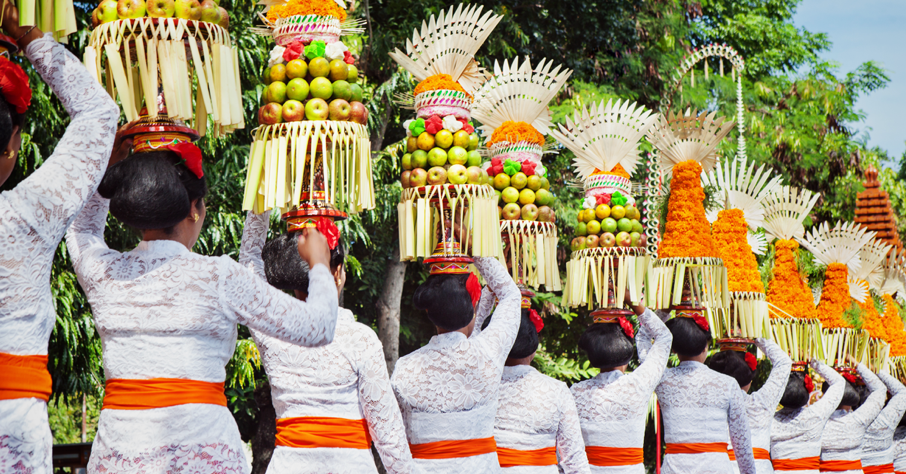
The air is thick with the scent of incense, frangipani, and roasted meats. Women gracefully carry towering banten (offerings) on their heads, meticulously arranged with colorful flowers, fruits, rice, and cakes, to be presented at the temples. These offerings are not merely gifts but a profound act of gratitude, a means of communicating with the divine and acknowledging the blessings bestowed upon them.
The prayers are solemn and heartfelt, often accompanied by the melodious chanting of priests. It is a time for deep spiritual connection, for seeking blessings, and for reaffirming one’s faith. After the temple ceremonies, families gather for shared meals, strengthening familial bonds and celebrating the triumph of good within their homes and hearts. The streets, though quiet, resonate with a profound sense of peace and collective devotion.
Beyond Galungan: The Continuing Festivities
The celebration doesn’t end on Galungan Day. The festive spirit and spiritual practices continue for ten days, culminating in Kuningan.
- Umanis Galungan (The day after): This day is dedicated to family visits, social gatherings, and enjoying the fruits of their spiritual labor. It’s also when children, dressed as the mythical lion-like creature Barong, perform Barong Ngelawang. They go door-to-door, performing a short dance, believed to cleanse the village of evil spirits and bring blessings and good fortune to homes.
- Kuningan (10 days after Galungan): Kuningan marks the culmination of the Galungan period, signifying the departure of the ancestral spirits and deities back to their heavenly abodes. On this day, special offerings of yellow rice (nasi kuning), often presented in small, woven bamboo containers called tamiang, are made. The yellow color symbolizes prosperity and the longevity of life. Prayers are offered to bid farewell to the visiting spirits, thanking them for their blessings and guidance. The Balinese believe that after midday on Kuningan, the spirits have fully ascended, so all rituals must be completed by then.
- Pegat Wakan: This day, occurring 35 days after Galungan (or 25 days after Kuningan), marks the final closure of the Galungan cycle, when the last remaining penjor are taken down, and the entire cycle of celebration and purification concludes.
Experiencing Galungan as a Visitor
For travelers, witnessing Galungan is an unparalleled cultural immersion. While it’s a deeply personal and sacred time for the Balinese, they are incredibly welcoming and often happy to share their traditions respectfully.
- Dress respectfully: When visiting temples or observing ceremonies, always wear a sarong and sash, and ensure your shoulders are covered.
- Observe quietly: Maintain a respectful distance and avoid interrupting ceremonies.
- Ask permission: If you wish to take photographs, especially of people, always ask for permission first.
- Embrace the atmosphere: Many businesses may operate on reduced hours, and traffic might be affected. Plan accordingly and allow yourself to soak in the unique spiritual ambiance.
- Join if invited: If a local family invites you to join their celebrations, consider it a profound honor and a unique opportunity to experience genuine Balinese hospitality.
Harmony Restored
Galungan is more than just a colorful spectacle; it is a profound affirmation of faith, a reaffirmation of the cosmic order, and a deeply personal journey for every Balinese Hindu. It is a time when the veil between the divine and the human world thins, allowing for a sacred communion that purifies, blesses, and harmonizes.
As the penjor stand tall and proud, swaying gently in the tropical breeze, they embody the enduring spirit of Bali – a spirit deeply rooted in tradition, devotion, and the timeless belief in the ultimate triumph of good. To witness Galungan is to witness the very heart of Bali beating, a beautiful symphony of "Harmony of Gods and Humans" that resonates long after the last offering has been made.