

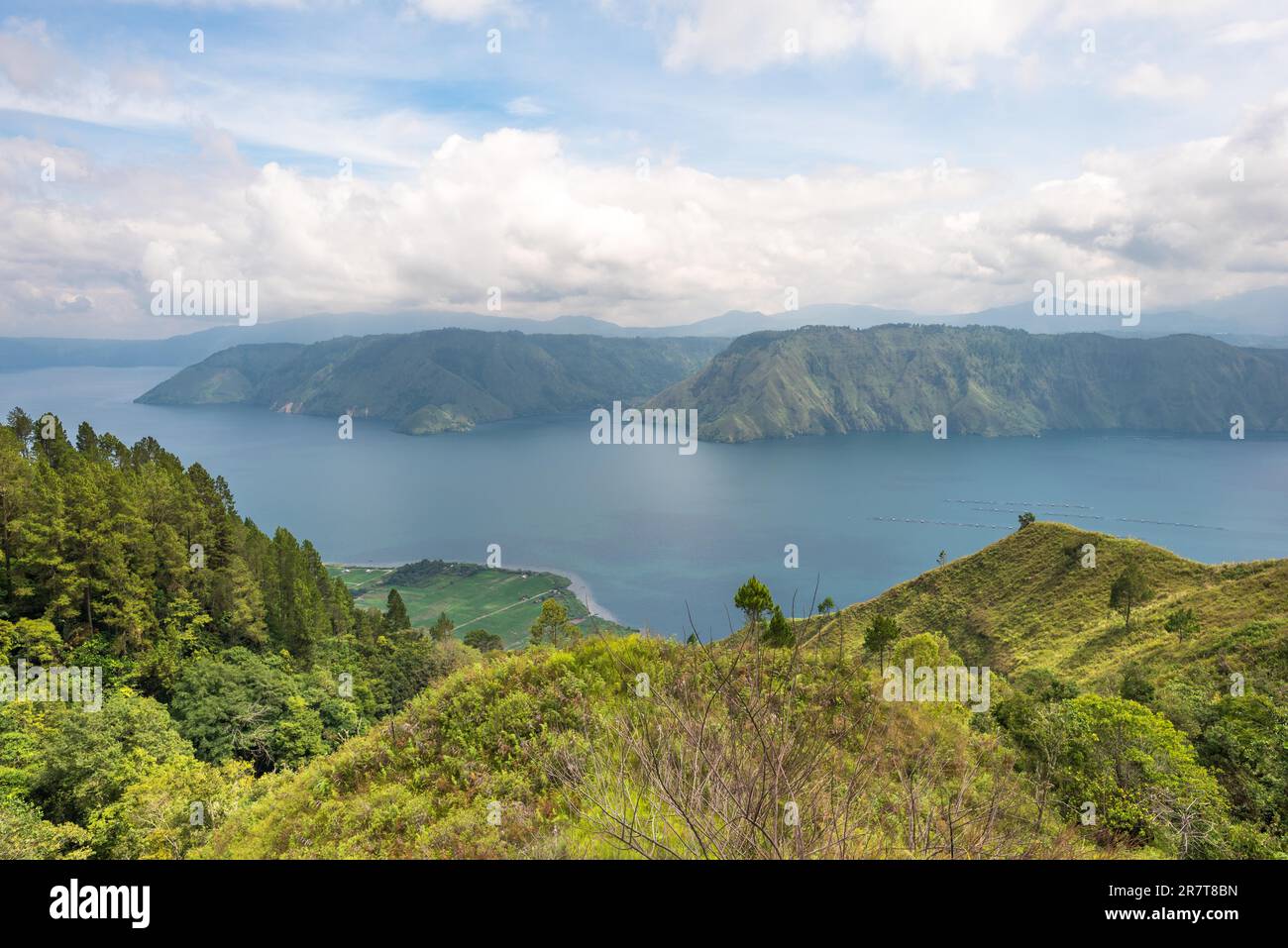
Lake Toba: The World’s Largest Volcanic Lake – A Cradle of Culture and Cataclysmic Beauty
Imagine a body of water so vast, so profound, it holds an entire island within its embrace – an island larger than Singapore. Now imagine that this colossal lake was born from one of the most cataclysmic events in Earth’s history, a supervolcano eruption that reshaped the planet. Welcome to Lake Toba, nestled in the highlands of North Sumatra, Indonesia – not just the largest volcanic lake on Earth, but a breathtaking testament to nature’s power and a vibrant heartland of unique culture.
More than just a stunning landscape, Lake Toba offers an unparalleled blend of geological wonder, serene beauty, and the rich, enduring spirit of the Batak people. It’s a destination that invites you to delve deep into its ancient past while immersing yourself in its vibrant present.
The Earth’s Fiery Breath: A Geological Masterpiece
To truly appreciate Lake Toba, one must first understand its dramatic genesis. Approximately 74,000 years ago, a colossal eruption – the Toba super-eruption – tore through the Earth’s crust. Classified as a VEI-8 event, it was the largest volcanic eruption in the last 2.5 million years, spewing an estimated 2,800 cubic kilometers of material into the atmosphere. This cataclysmic event triggered a global "volcanic winter" that may have lasted for years, drastically impacting global climate and potentially causing a genetic bottleneck in human evolution.
When the dust settled, the massive magma chamber beneath the volcano collapsed, forming an enormous caldera – a gigantic basin. Over millennia, this caldera filled with rainwater, creating the spectacular Lake Toba we see today. Stretching over 100 kilometers long, 30 kilometers wide, and reaching depths of up to 505 meters (1,666 feet), it truly is a freshwater inland sea.
At the heart of this colossal lake lies a marvel within a marvel: Samosir Island. This mountainous island, roughly the size of Singapore, is not just any island; it’s a resurgent dome, pushed up by magma pressure after the main eruption. It’s one of the largest islands in the world situated within a lake on an island, creating a unique geographical anomaly that captivates every visitor.
Samosir Island: An Island Within an Island, A Culture Within a Lake
Samosir Island is more than just a geological curiosity; it is the cultural heartland of the Batak Toba people, one of the indigenous ethnic groups of Sumatra. Their ancestral roots run deep here, and their unique traditions, language, and way of life have been meticulously preserved for centuries.
As you explore Samosir, you’ll encounter charming villages dotted with traditional Batak houses (known as rumah adat). These distinctive structures are instantly recognizable by their saddle-shaped roofs, intricately carved facades (gorga), and vibrant paintwork, often depicting mythical creatures and ancestral stories. These homes are not merely dwellings but reflections of the Batak cosmology and social structure.
The Batak people are renowned for their warm hospitality, their love for music (especially the rhythmic gondang percussion ensembles), and their elaborate ceremonies, particularly their unique funeral rituals which are central to their spiritual beliefs. You’ll find a strong sense of community and tradition woven into the fabric of daily life on Samosir. Don’t be surprised if you’re invited to share a cup of coffee or try their delicious local cuisine, such as arsik (spicy carp fish) or saksang (spicy pork or dog meat dish).
An Explorer’s Dream: Unveiling Toba’s Treasures
Lake Toba offers a plethora of activities for every kind of traveler, blending relaxation with adventure and cultural immersion.
- Explore Samosir by Scooter: Renting a scooter is arguably the best way to discover Samosir Island at your own pace. Wind your way through picturesque villages, past rice paddies, and along winding roads offering panoramic lake views.
- Visit Ancient Batak Villages:
- Tomok: A popular starting point for many, Tomok is home to the ancient stone tombs of King Sidabutar and his descendants, as well as a bustling market where you can find traditional Batak crafts like ulos (handwoven textiles), carvings, and souvenirs.
- Ambarita: Step back in time at Ambarita, famous for its ancient stone chairs and table, once used for tribal meetings and, according to local legend, ritualistic executions and cannibalistic feasts (be aware of the macabre history).
- Chase Waterfalls and Hot Springs: Venture off the island to witness the majestic Sipiso-Piso Waterfall, plunging over 120 meters into a gorge, offering spectacular views of the northern end of Lake Toba. On Samosir itself, you can find natural hot springs at Pangururan, where the therapeutic sulfuric waters offer a relaxing soak.
- Hike Pusuk Buhit: For the adventurous, a hike up Pusuk Buhit, one of the highest peaks surrounding the lake, is rewarded with truly unparalleled, sweeping vistas of the entire caldera and Samosir Island. It’s considered the ancestral home of the Batak people, adding a spiritual dimension to the trek.
- Indulge in Water Activities: With its clear, cool waters, Lake Toba is perfect for swimming, kayaking, or simply lounging by the shore. Many accommodations offer direct lake access, allowing for refreshing dips throughout the day.
- Enjoy the Serenity: Perhaps the greatest attraction of Lake Toba is its inherent tranquility. The sheer scale of the landscape, combined with the gentle rhythms of Batak life, creates an atmosphere of profound peace and calm, making it an ideal escape from the hustle and bustle of modern life.
Beyond the Horizon: Sustainable Tourism and Local Impact
As Lake Toba gains increasing recognition as a global tourism destination, there’s a growing emphasis on sustainable tourism practices. The Indonesian government has designated Lake Toba as one of its "super-priority" destinations, investing in infrastructure and promoting responsible travel. Visitors are encouraged to respect local customs, support local businesses, and minimize their environmental footprint to help preserve this unique ecosystem and cultural heritage for future generations.
Planning Your Toba Adventure
- Getting There: The most common route is to fly into Kualanamu International Airport (KNO) in Medan, North Sumatra. From Medan, take a bus or private taxi to Parapat (a journey of 4-6 hours), the main gateway to Lake Toba. From Parapat, frequent public ferries depart for Tuk-Tuk on Samosir Island.
- Best Time to Visit: The dry season, typically from May to September, offers the most pleasant weather with sunny days and cooler evenings.
- Accommodation: Samosir Island, especially the Tuk-Tuk peninsula, offers a wide range of accommodation, from budget-friendly guesthouses and homestays to mid-range hotels and resorts, many with lakefront views.
- What to Bring: Comfortable walking shoes, swimwear, sun protection, insect repellent, a camera, and an open mind ready to embrace a unique cultural experience.
A Legacy to Preserve
Lake Toba is more than just a destination; it’s an experience that transcends the ordinary. It’s a place where the raw power of geological history converges with the enduring beauty of human culture. From its dramatic birth in fire and ash to its present-day serenity, Lake Toba stands as a magnificent testament to resilience – both of the Earth and of its people. Visiting Lake Toba is not just a journey to a beautiful lake; it’s an immersion into a story millions of years in the making, a story that continues to unfold with every ripple on its vast, reflective surface.